

Coffee, the beverage that has become an inseparable part of billions of people’s lives worldwide, has a history full of mystery and wonder. From bustling coffee shops in metropolitan cities to quiet morning rituals at home, coffee has changed how we interact, work, and socialize. But have you ever wondered how this long journey of the beverage began?
The Legend of Kaldi: An Accidental Discovery
The most popular story about coffee’s discovery comes from the Ethiopian highlands in the 9th century. A goatherd named Kaldi noticed that his goats became unusually energetic and couldn’t sleep after eating bright red berries from a certain bush. Curious about this phenomenon, Kaldi tried the berries himself and experienced the same effect—a sense of alertness and energy he had never felt before.

Kaldi brought these magical fruits to a nearby monastery. The monks were initially skeptical and even threw the berries into the fire, considering them “the devil’s work.” However, the fragrant aroma that emerged from the roasted beans made them reconsider. They gathered the beans from the fire, crushed them, and mixed them with hot water—creating the first beverage we know as coffee today.
From Ethiopian Forests to the Arab World
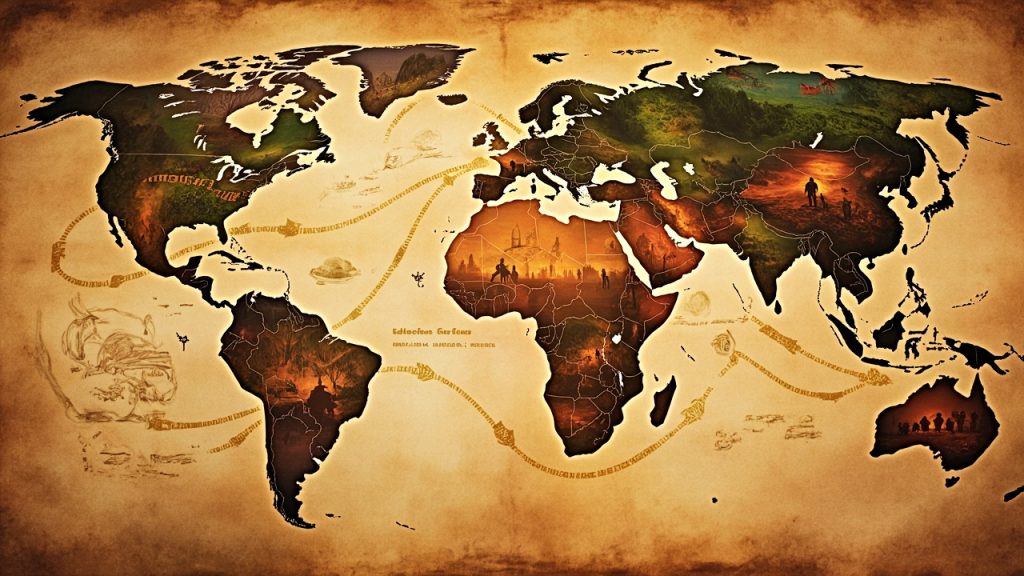
Knowledge of coffee began to spread from Ethiopia to the Arabian Peninsula through trade routes. In Yemen, coffee became not just a beverage but an integral part of spiritual culture. Sufi mystics used coffee to help them stay awake during night prayers and long meditation sessions. The port of Mocha in Yemen became the world’s most important coffee trading center for centuries.
According to some sources, there’s also the story of Sheikh Al-Shadhili, considered one of the important figures in spreading coffee in the Islamic world. Arab traders carefully guarded the secret of coffee cultivation, even ensuring that exported beans were boiled or roasted first to prevent others from planting them.
Coffee Conquers Europe
Coffee first arrived in Europe through Venice in the 17th century. Initially, the beverage faced strong opposition from the Catholic Church, which called it “the devil’s drink” due to its Islamic origins. However, when Pope Clement VIII tried coffee and enjoyed it, he blessed the beverage, paving the way for coffee’s acceptance throughout Europe.
The first coffee houses in Europe opened in Venice in 1645, followed by Oxford in 1650, and London in 1652. These establishments became centers of intellectual life, where philosophers, writers, and businessmen gathered to discuss ideas. In London, coffee houses were even nicknamed “Penny Universities” because for one penny, one could get a cup of coffee and access to various intellectual discussions.
Global Journey: From Colonialism to Modern Culture
European nations, particularly the Dutch and French, began bringing coffee plants to their colonies in Asia and the Americas. The Dutch successfully brought coffee plants from Yemen to Sri Lanka (Ceylon) and then to Java in the 17th century. Meanwhile, the French introduced coffee to the Caribbean and South America.
One of the most dramatic stories in coffee history involves Gabriel de Clieu, a French naval officer who brought coffee seedlings from the Paris Botanical Garden to Martinique in 1720. During the perilous journey, he shared his limited water supply with the coffee plants, successfully protecting them from pirate attacks and storms.
Fascinating Facts About Coffee History
- Coffee Bean Theft: In 1670, a Muslim pilgrim named Baba Budan managed to smuggle seven coffee beans from Yemen by sewing them into his clothing. He planted them in India, starting coffee cultivation outside Arabia.
- First Coffee House: The world’s first coffee house, Kiva Han, opened in Istanbul in 1475, long before coffee reached Europe.
- Instant Coffee Revolution: The first instant coffee was invented by Satori Kato of Japan in 1901, but it became globally popular after World War II.
Conclusion: A Legacy in Every Cup
Every time we enjoy a cup of coffee, we’re actually participating in a long history that spans over a thousand years. From the curious Ethiopian goatherd to the spiritual Yemeni monks, from the brave Venetian traders to the ambitious European colonists—all have left their mark on the beverage we enjoy today.
Coffee isn’t just about caffeine or its bitter taste. It’s a story of cultural exchange, innovation, and human connections woven across continents and time. So, as you sip your morning coffee, remember that you’re tasting a global legacy that has connected people for centuries.